
Hydraulic Holders vs Shrink Fit Holders: Which Is Better for Precision Machining?
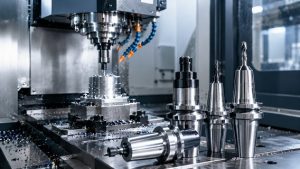
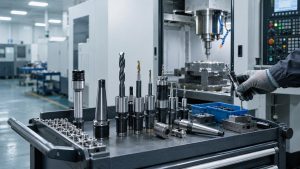
Hydraulic holders and shrink fit holders are two of the most common solutions in precision machining. Both are used in CNC milling, mold making, and high-accuracy cutting, but they are designed for different conditions. For buyers and machine shops, the question is not which one is universally better, but which one is better for the actual machining task.
A hydraulic holder uses internal hydraulic pressure to clamp the cutting tool. This creates uniform clamping force and stable runout performance. Hydraulic holders are well known for their vibration damping effect, which makes them especially useful in finishing operations. They are often used for contour milling, reaming, drilling, and mold finishing where smooth cutting and good surface quality are important.
One of the biggest advantages of hydraulic holders is ease of use. Tool changes are simple and do not require heating equipment. For workshops that value quick setup and flexible daily operation, hydraulic holders are often a convenient and reliable option.
A shrink fit holder, by contrast, uses thermal expansion to clamp the tool. The holder is heated, the tool is inserted, and the holder grips the tool as it cools. This creates a strong and concentric clamping force. Shrink fit holders are known for their slim design, excellent balance performance, and suitability for high-speed machining.
Because of their compact body, shrink fit holders are commonly used in deep cavity machining, mold applications, and other situations where tool access is limited. They are also popular in high-RPM cutting because they perform well in balanced, high-speed conditions.
So how should buyers choose?
If the machining task focuses on surface finish, vibration reduction, and stable finishing performance, hydraulic holders are often the better choice. Their damping performance helps reduce chatter and improve cutting consistency.
If the application requires high-speed machining, slim tool access, and compact geometry, shrink fit holders may be the better option. They are particularly useful when the cutting area is narrow or the spindle speed is high.
There are also practical workshop considerations. Shrink fit holders require a heating unit and a controlled tool changing process. Hydraulic holders do not. For some manufacturers, this affects not only cost but also workflow and training requirements.
Other factors buyers should review include:
spindle speed
tool diameter
machining depth
part geometry
surface finish target
tool accessibility
available workshop equipment
In many advanced machining shops, hydraulic holders and shrink fit holders are used together rather than treated as competing products. A shop may use hydraulic holders for finishing and shrink fit holders for high-speed or deep-cavity work.
In the end, both systems are valuable. Hydraulic holders are strong in precision finishing and vibration control. Shrink fit holders are strong in high-speed cutting and slim tool access. The best choice depends on the real machining requirement. A professional CNC tool holder manufacturer can help buyers match the right holder to the machine, tool, and production goal.