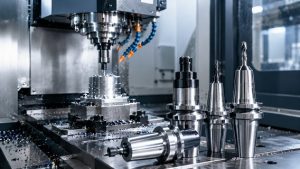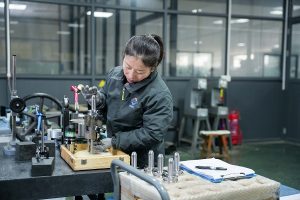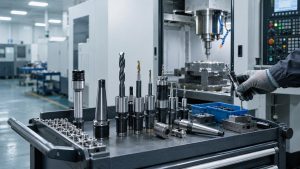

Why Tool Holder Balance Matters in High-Speed Machining
In high-speed machining, many factors affect cutting performance: spindle speed, cutting parameters, tool quality, and machine rigidity. But one factor that is often underestimated is tool holder balance. At higher RPM, even a small imbalance in the tool holder can create significant vibration, affecting surface finish, tool life, and overall machining stability.
A balanced tool holder rotates more smoothly. This reduces vibration during cutting and helps the machine maintain stable performance at high spindle speeds. In mold machining, precision milling, and high-speed finishing, this can make a clear difference in machining quality.
When a tool holder is not balanced properly, several problems may appear. The first is vibration. At low speed, the effect may be small. But at high RPM, imbalance becomes much more noticeable. This vibration can damage the surface finish, reduce dimensional accuracy, and increase spindle load.
The second problem is shorter tool life. Vibration increases the load on the cutting edge and creates unstable contact between the tool and the workpiece. This causes faster wear and may even lead to premature tool breakage, especially with small-diameter tools used in mold and precision work.
Another issue is reduced spindle protection. Unbalanced rotation transfers more force into the spindle system. Over time, this can increase mechanical stress and reduce machine stability, especially in long production runs.
Tool holder balance is especially important in applications such as:
high-speed mold machining
finishing of complex surfaces
deep cavity milling
small-diameter tool cutting
high-RPM machining centers
Different tool holder types can support high-speed machining, but some are more commonly associated with balanced applications. Shrink fit holders, for example, are widely used because of their symmetrical design and suitability for high-speed rotation. Certain precision hydraulic holders and custom balanced holders are also used in demanding finishing applications.
When selecting a holder for high-speed machining, buyers should consider:
spindle speed range
holder balance quality
tool diameter and overhang
machining material
required surface finish
whether the holder is designed for high-RPM use
It is also important to remember that balance is not only about the holder body. The complete assembly—including the cutting tool, collet, nut, or accessory—affects actual running balance.
For manufacturers and buyers, balanced tool holders are not just a premium option. In high-speed machining, they are often a practical requirement for stable production. Better balance means smoother cutting, longer tool life, improved surface finish, and more reliable spindle performance. For shops working in precision machining, investing in the right high-speed tool holder can significantly improve long-term results.