01
2026.08
Why Tool Holder Balance Matters in High-Speed Machining
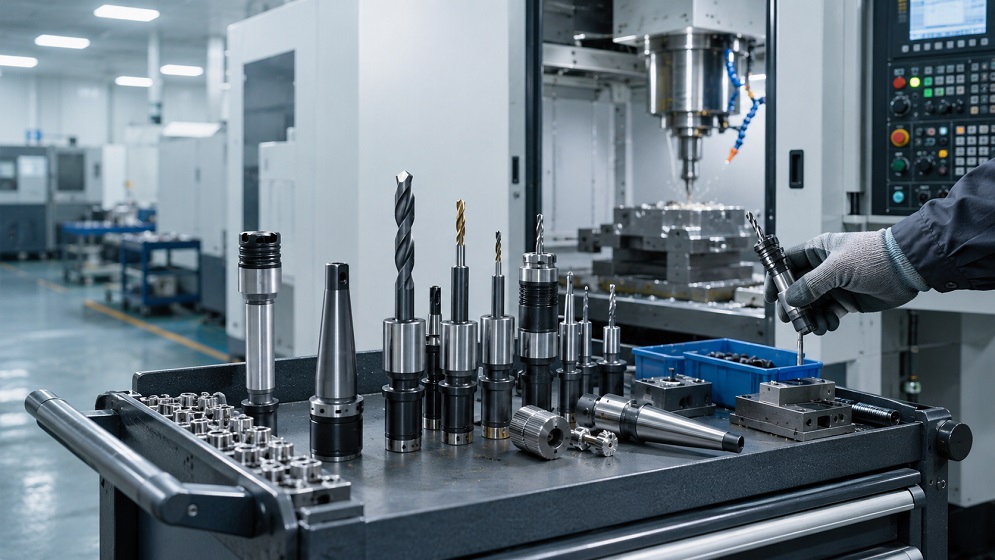
In high-speed machining, many factors affect cutting performance: spindle speed, cutting parameters, tool quality, and machine rigidity. But one factor that is often underestimated is tool holder balance. At higher RPM, even a small imbalance in the tool holder can create significant vibration, affecting surface finish, tool life, and overall machining stability. A balanced tool holder rotates more smoothly. This reduces vibration during cutting and helps the machine maintain stable performance at high spindle speeds. In mold machining, precision milling, and high-speed finishing, this can make a clear difference in machining quality. When a tool holder is not balanced properly, several problems may appear. The first is vibration. At low speed, the effect may be small. But at high RPM, imbalance becomes much more noticeable. This vibration can damage the surface finish, reduce dimensional accuracy, and increase spindle load. The second problem is shorter tool life. Vibration increases the load on the cutting edge and creates unstable contact between the tool and the workpiece. This causes faster wear and may even lead to premature tool breakage, especially with small-diameter tools used in mold and precision work. Another issue is reduced spindle protection. Unbalanced rotation transfers more force into the spindle......
Read More
01
2026.08
How Quality Inspection Improves CNC Tool Holder Reliability
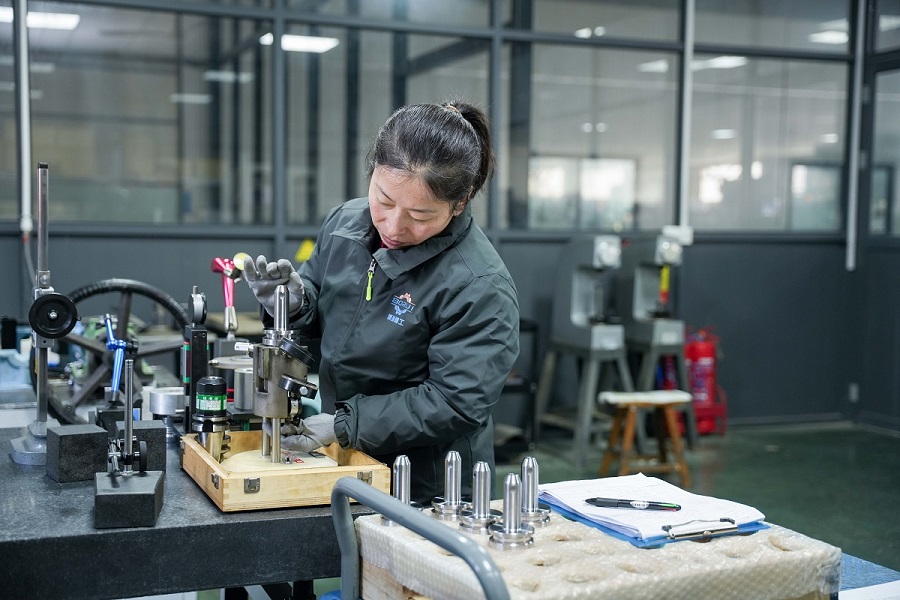
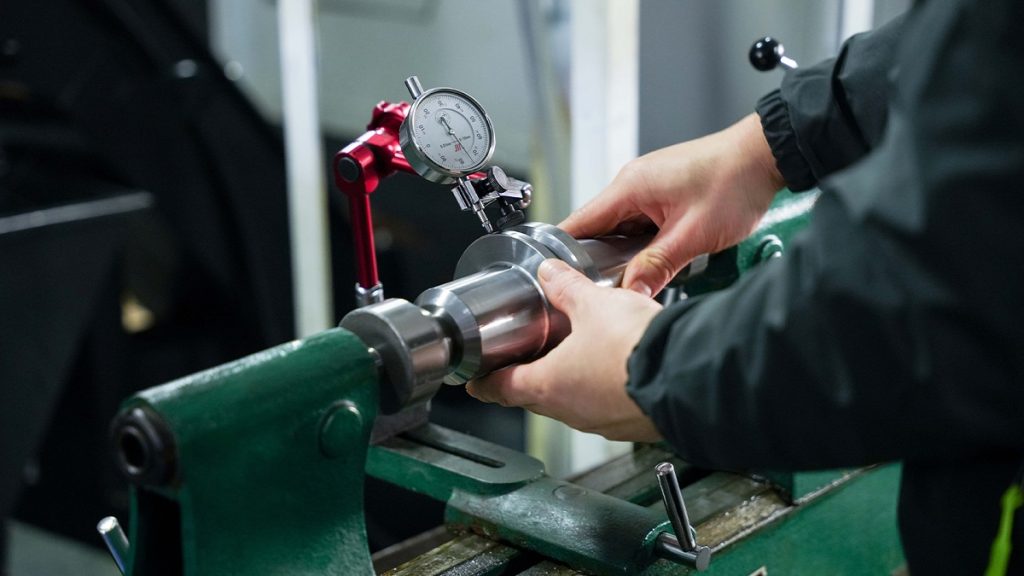
In CNC tool holder manufacturing, good machining alone is not enough. A tool holder may look well-finished on the outside, but its real value depends on internal accuracy, clamping consistency, taper fit, and assembly quality. This is why quality inspection is one of the most important parts of reliable tool holder production. A tool holder sits between the machine and the cutting tool. If its accuracy is unstable, the entire machining process can be affected. Problems such as poor taper fit, clamping bore deviation, excessive runout, or weak assembly accuracy in driven holders can lead to vibration, poor surface finish, reduced tool life, and unstable production. One of the first inspection points is taper accuracy. The taper must match the spindle correctly to ensure stable mounting and proper contact. If the taper is not accurate, the holder may not seat properly in the spindle, which can create vibration and reduce machining precision. Another key point is clamping bore accuracy. In hydraulic holders, shrink fit holders, collet holders, and power chucks, the clamping section must be machined precisely. Even small errors can affect tool grip, runout, and cutting stability. Runout inspection is especially important for precision machining applications. A holder with......

Read More
01
2026.08
Angle Heads in CNC Machining: When and Why to Use Them
In CNC machining, not every feature can be reached easily from the machine spindle’s standard direction. Some workpieces require side drilling, side milling, or machining on surfaces that are difficult to access directly. In these situations, angle heads are a practical solution. An angle head is a spindle attachment that changes the direction of the cutting tool. Instead of cutting only in the spindle’s main axis direction, the machine can perform machining operations at 90 degrees or another angle, depending on the design of the angle head. This allows one machine to handle more machining tasks without moving the part to a second setup. Angle heads are especially useful when the workpiece has: side holes cross holes side milling surfaces deep or limited-access features multi-face machining requirements One of the main reasons to use an angle head is to reduce secondary setups. Without an angle head, the workpiece may need to be reclamped or rotated to reach a certain feature. This takes time and can reduce positioning accuracy. With the right angle head, the same feature can often be machined in the original setup. Angle heads are commonly used in: mold and die machining automotive components large housings and plates......
Read More
01
2026.08
How Custom Tool Holder Solutions Help Solve Non-Standard Machining Tasks
Standard tool holders are suitable for many machining tasks, but real production often includes applications that go beyond standard catalog products. Deep-hole drilling, high-speed mold machining, special machine interfaces, and limited tool access can all create situations where standard holders are no longer the best choice. This is where custom tool holder solutions become important. A custom tool holder is not simply a holder with a different length. It is a solution developed around a specific machining challenge. The goal is to improve stability, fit the machine or workpiece more accurately, and help the customer solve a problem that standard products cannot handle efficiently. One common example is deep-hole machining. Standard holders may be too short or may not provide enough rigidity for long-overhang cutting. In these cases, a custom holder can be designed with a longer body, reinforced structure, or anti-vibration improvement to support deeper machining while reducing chatter. Another common application is special machine interface matching. Some turning centers or machining systems use specific VDI, BMT, or spindle-related tooling configurations that standard holders do not fully match. Custom holders allow the output interface, body structure, or mounting section to be adjusted for the exact machine setup. High-speed precision......
Read More
01
2026.08
Hydraulic Holders vs Shrink Fit Holders: Which Is Better for Precision Machining?
Hydraulic holders and shrink fit holders are two of the most common solutions in precision machining. Both are used in CNC milling, mold making, and high-accuracy cutting, but they are designed for different conditions. For buyers and machine shops, the question is not which one is universally better, but which one is better for the actual machining task. A hydraulic holder uses internal hydraulic pressure to clamp the cutting tool. This creates uniform clamping force and stable runout performance. Hydraulic holders are well known for their vibration damping effect, which makes them especially useful in finishing operations. They are often used for contour milling, reaming, drilling, and mold finishing where smooth cutting and good surface quality are important. One of the biggest advantages of hydraulic holders is ease of use. Tool changes are simple and do not require heating equipment. For workshops that value quick setup and flexible daily operation, hydraulic holders are often a convenient and reliable option. A shrink fit holder, by contrast, uses thermal expansion to clamp the tool. The holder is heated, the tool is inserted, and the holder grips the tool as it cools. This creates a strong and concentric clamping force. Shrink fit holders......
Read More
28
2026.07
How to Choose the Right CNC Tool Holder for Different Machining Applications
Choosing the right CNC tool holder is one of the most important decisions in machining. A tool holder does much more than connect the cutting tool to the spindle or turret. It directly affects clamping stability, runout, vibration, surface finish, tool life, and overall machining efficiency. The first step is to understand the machining application. Different processes require different holder characteristics. A finishing operation often needs excellent concentricity and vibration damping, while rough milling usually needs stronger clamping force and higher rigidity. Turning centers, on the other hand, require tooling systems designed for turret-based machining rather than spindle-mounted milling holders. For precision milling and finishing, hydraulic holders are a common choice. Their hydraulic clamping system provides stable grip and good vibration damping, which helps improve surface finish and machining consistency. They are often used in mold machining, precision part finishing, and small-diameter tool applications where stable runout is important. For high-speed machining, shrink fit holders are widely used. They offer strong clamping force, a slim body design, and good balance performance. This makes them suitable for high-RPM cutting, deep cavity machining, and applications where tool access is limited. In mold and die work, shrink fit holders are especially useful because......
Read More