
How Custom Tool Holder Solutions Help Solve Non-Standard Machining Tasks
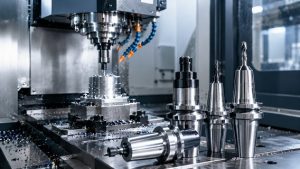
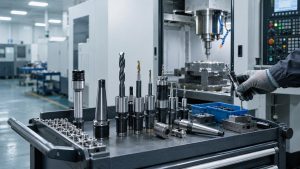
Standard tool holders are suitable for many machining tasks, but real production often includes applications that go beyond standard catalog products. Deep-hole drilling, high-speed mold machining, special machine interfaces, and limited tool access can all create situations where standard holders are no longer the best choice. This is where custom tool holder solutions become important.
A custom tool holder is not simply a holder with a different length. It is a solution developed around a specific machining challenge. The goal is to improve stability, fit the machine or workpiece more accurately, and help the customer solve a problem that standard products cannot handle efficiently.
One common example is deep-hole machining. Standard holders may be too short or may not provide enough rigidity for long-overhang cutting. In these cases, a custom holder can be designed with a longer body, reinforced structure, or anti-vibration improvement to support deeper machining while reducing chatter.
Another common application is special machine interface matching. Some turning centers or machining systems use specific VDI, BMT, or spindle-related tooling configurations that standard holders do not fully match. Custom holders allow the output interface, body structure, or mounting section to be adjusted for the exact machine setup.
High-speed precision machining is another area where custom holders can help. In mold machining or finishing operations, customers may need better balance, slimmer access, or more stable clamping for small tools. A custom holder can be optimized for balance, taper accuracy, or tool accessibility based on the cutting condition.
Custom tool holders are also useful in multi-process production. Some projects require one holder to support multiple machining tasks, quick-change setups, or specific tool change logic. A customized structure can improve efficiency and reduce unnecessary setup time.
Depending on the project, custom tool holder solutions may include:
extended or shortened body length
special spindle or turret interfaces
anti-vibration reinforcement
coolant-through structure
slim nose design for limited access
modified clamping system
OEM logo or private-label customization
The biggest benefit of custom tooling is that it helps align the holder with the real machining task instead of forcing the process to adapt to a standard product. This often leads to better stability, lower rework risk, and improved machining efficiency.
When requesting a custom tool holder, buyers should prepare as much technical information as possible, including:
machine model and interface type
cutting tool size
workpiece drawing or application description
spindle speed or machining condition
current tooling problem
target improvement
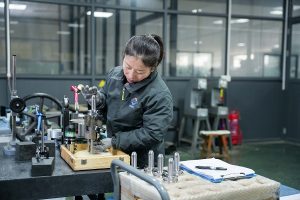
Custom tool holder solutions are not only for unusual projects. They are often the most practical answer when standard tooling cannot fully support the machining process. For buyers working in precision machining, turning center tooling, or OEM manufacturing, a supplier with custom development capability can create long-term value beyond simple product supply.