
What Makes a Reliable CNC Tool Holder Manufacturer?
For buyers in the machining industry, choosing a CNC tool holder manufacturer is not only about price. Tool holders directly affect machining accuracy, vibration control, spindle protection, tool life, and production stability. A reliable supplier should offer more than a catalog. They should provide stable quality, manufacturing capability, and practical technical support.
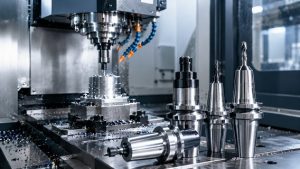
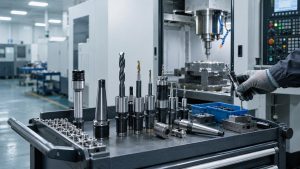
The first thing to look for is product specialization. A professional tool holder manufacturer should understand the differences between hydraulic holders, shrink fit holders, power chucks, VDI tool holders, BMT tool holders, and angle heads. Different machining tasks require different holder structures, and a qualified supplier should be able to explain where each product fits.
The second key factor is precision manufacturing capability. Tool holders are tolerance-sensitive components. Their performance depends on turning, grinding, heat treatment, and assembly accuracy. A reliable manufacturer should have suitable CNC machining equipment, precision grinding capability, and a controlled production process rather than basic general machining only.
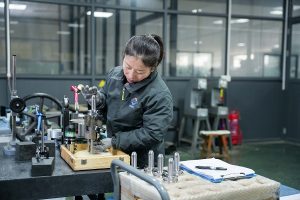
Quality control is equally important. Buyers should check whether the supplier can control taper accuracy, runout, clamping bore tolerance, balance performance, and assembly quality for driven tooling products. A tool holder may look fine visually but still fail in real machining if its critical dimensions are not stable.
Another important point is OEM and custom support. In many real projects, standard holders are not enough. Customers may need special lengths, modified interfaces, anti-vibration structures, or branding support. A reliable CNC tool holder manufacturer should be able to develop non-standard solutions based on drawings, samples, or machining requirements.
Product range coordination is also valuable. Many global buyers prefer working with suppliers who can support multiple product lines in one project, such as milling holders, turning center tooling, driven holders, and angle heads. This improves sourcing efficiency and helps maintain technical consistency across the tooling system.
For overseas buyers, export experience and communication matter as well. A reliable manufacturer should be able to discuss machine interfaces, application needs, and technical drawings clearly. Fast and accurate communication reduces project risk, especially in OEM or custom tooling development.
Perhaps most importantly, a good manufacturer should show application understanding rather than just sales behavior. Instead of asking only for a product code, they should ask about the machine type, cutting task, workpiece material, spindle speed, and current tooling problem. This shows they are trying to solve a machining issue, not simply sell a part.
A reliable CNC tool holder manufacturer combines precision machining, quality control, product knowledge, and custom support. For distributors, machine tool builders, and machining companies, the right supplier is not only a product source. It is a long-term technical partner that helps improve machining reliability and production performance.